Earlier this year, Aussie Cam McEvoy broke the 50-metre freestyle world record, smashing a mark set over a decade ago during the now-banned supersuit era.
A record most people thought was untouchable.
What McEvoy did wasn’t incremental. After the Tokyo Olympics, he stepped away from the sport entirely. Came back with a radically overhauled training program - fewer laps, more strength and power, built on his background in mathematics and physics. He didn’t fight the existing model. He built a new one.
César Cielo, the man whose record fell, congratulated him on social media with a Buckminster Fuller quote:
“You never change things by fighting the existing reality. To change something, build a new model that makes the existing model obsolete.”
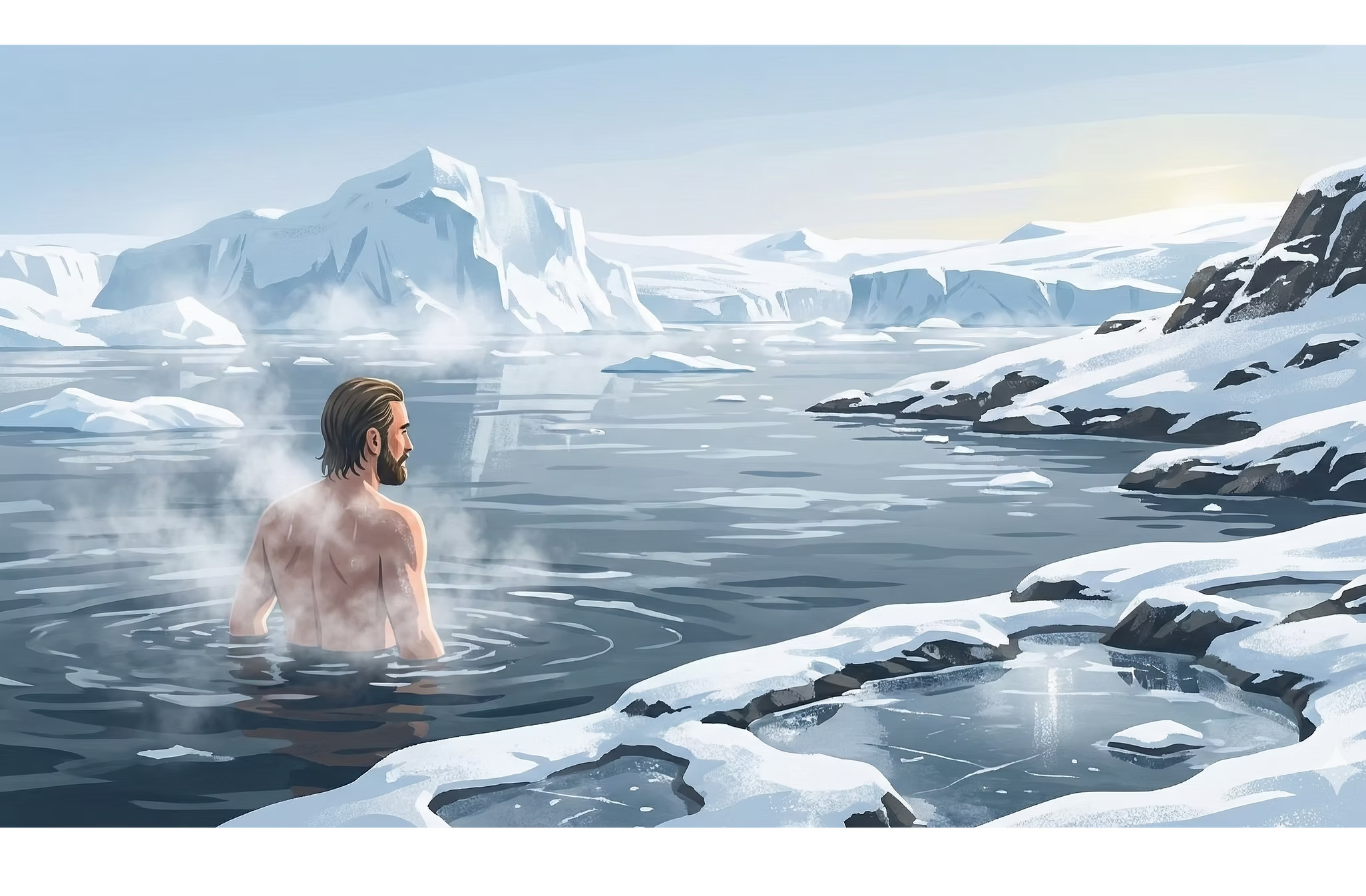
The leaders I keep interviewing aren’t fighting existing realities either. They’re walking away from them. Stepping into cold water. Letting the shock of a completely new environment strip away everything that isn’t essential - and discovering who they actually are on the other side.
I think about this a lot through my own practice. I started ocean swimming at 34 - I couldn’t swim before that. The cold water doesn’t care about your job title, your CV, or your plans. It strips you back to basics. Breathe. Move. Stay calm.
And in that clarity, you find out what you’re actually made of.
That’s what this edition’s guest did - not in the ocean, but across continents, careers, and an entire identity.
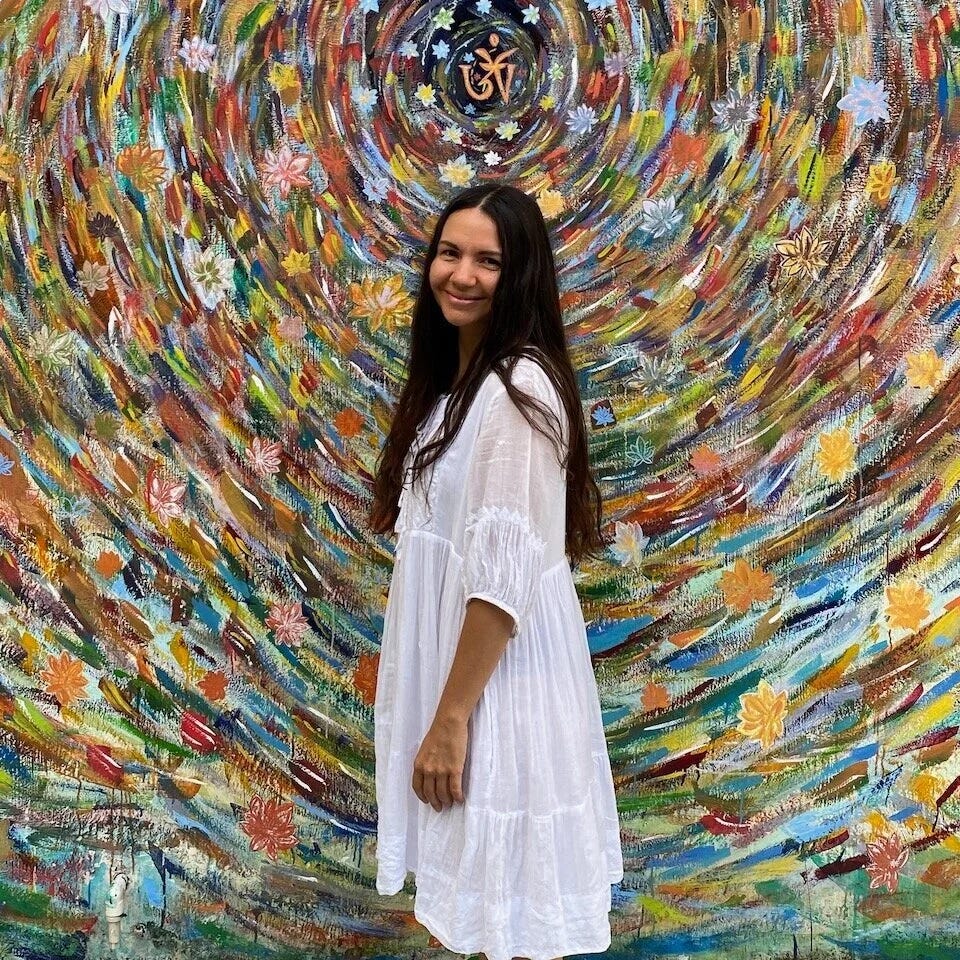
Cold Clarifies with Dr Corinna Galliano
(The University of Sydney Business School)
The full episode is available now on Spotify and Apple
Corinna Galliano is a researcher at the University of Sydney Business School whose work sits at the intersection of entrepreneurship, paradox theory, and how founders experience the tensions that most business schools teach as strategy problems. Born in Italy, trained as a structural civil engineer, then a management consultant, and now an accredited Vedic meditation teacher - Corinna has an unusual range.
We first met on a course called Leading in a Post-Crisis World, which given everything that’s happened since, turned out to be more relevant than either of us expected.
The plan that collapsed
Corinna followed the safe path - the one a family without abundance teaches you to choose. Her first job was an architecture firm. The founder pulled her aside:
“You are a really intelligent and smart woman. You must leave Italy. This country is going to be done in 10 years.”
She parked the advice. Fell in love with a man from Milan. Moved into management consulting. Then joined a cleantech startup - three years of dynamic, exciting work at the forefront of renewable energy.
Then the Italian government gutted the industry overnight. The startup was gone. The industry was gone. The plan was gone.
She didn’t fight the existing reality, she reinvented herself.
An MBA, then a director who told her there were no jobs, not even internships. So she reopened a browser tab she’d closed ten years earlier: the Australian Endeavour Award, named for a country she knew only through a childhood pen friend in Adelaide - a girl who’d once sent her a little kangaroo pin.
She got the scholarship and the PhD offer. So at 35 she left Italy, ended the relationship, and started over.
Everyone called her courageous. She didn’t feel courageous. It was just the only move that made sense.
The loneliness that clarifies
What Corinna didn’t expect was how cold the water would actually be.
The cultural change. The language change. Going from a beautiful home in Milan to share housing. A PhD is a lonely journey for anyone - but doing it alone in a country 24 hours from your family was something else entirely.
“The level of loneliness that I was experiencing was massive. And it was the thing that I feared the most in my life.”
That’s when she found Vedic meditation. She’d tried different techniques over the years, but this was different - she could meditate every day without effort, and day by day, the turmoil settled. She went on to train under Thom Knowles for two years, including three months in the Himalayas. Not a casual interest in stillness. A deep commitment to it.
“When you get in touch with the source of your own self, that is so big that loneliness can’t be there anymore.”
She watched her PhD colleagues consumed by anxiety about the future. And she noticed she was walking the same path without the fear she’d carried her entire life. The cold water had done its work. Not by making the loneliness disappear - but by forcing her to find something inside herself that was bigger than the loneliness.
Transformation happens before you can name it
Corinna’s research explores how people actually experience transformation - and what she’s found is that they usually can’t see it while it’s happening.
“When people are going through a transformation, they’re not that aware that they are going through transformation. What they’re aware of is the struggles, the uncomfortable feelings. They only realise it was a transformation looking backwards.”
That’s why she builds discomfort into her teaching. Experiential learning. Students who don’t think they’re entrepreneurial get put through the process of creating something from nothing with zero resources. And they discover they can.
Her PhD found something that mirrors what I keep hearing in every interview I conduct: the classic explore-exploit tension in startups isn’t actually a strategy problem. It’s an identity problem. Founders, investors, and stakeholders keep asking the same question - “Who are we? Are we a tech company or an insurance company?” - and the tension lives at the level of belonging, not business models.
Every transformation story starts with identity, not with a plan.
The belief that worry keeps you safe
When I asked Corinna what childhood belief she had to let go of to become who she is today, she didn’t hesitate.
“I had to let go of the idea that if I worry strongly enough, I’m going to be safe.”
It came from her grandmother - a woman who saw people killed in the streets during the Second World War, had her house burned to the ground, and spent most of her life inside as a result. The fear was inherited. The pattern was hard-wired: if something changes, be afraid. If there’s uncertainty, worry harder. The worry will save you.
Corinna carried that pattern through her childhood, through her engineering career, through the cleantech collapse, all the way to Australia. And then, through years of meditation practice, she unwound it.
“Today I can say I don’t have anxiety anymore. I don’t have fear anymore. And to me that’s been the biggest gift I ever received.”
That’s the Cold Clarifies framework. The difficult moments - the collapsed industry, the country left behind, the loneliness that was the thing she feared most - weren’t obstacles to who she was becoming. They were the mechanism. The cold water strips away everything that isn’t essential. And what’s left is you.
Cam McEvoy stepped away from swimming and came back transformed. Corinna stepped away from engineering, from Italy, from the belief that worry keeps you safe - and rebuilt herself. Not by fighting the existing reality. By letting the cold clarify what was real.