


I was writing obsessively in China.
Spiralling into an endless abyss of ideas. Just me, my laptop, and the hotel room in Chaozhou. As my partner and her daughter slept soundly nearby, tomes of material spilt forth from the lightest of prompts.
Each one more polished and less mine than the last.
As my pulse raced, torn between intellectual excitement and skepticism, I reached for a word. Mania. AI mania. The intoxicating sense that everything is converging, that the architecture emerging on screen is evidence of genuine intellectual progress.
Was it a flow state? Or was I drowning, alone.
Somewhere on the third night I read an essay by KETS-DE-VRIES Manfred, the INSEAD psychoanalyst, circulated by my perpetually active alumni chat. 50 human beings from all parts of the world continuously freewheeling their thoughts. Taking perverse pleasure in never missing a happy birthday.
”A life consists not only of crises, obligations, medical diagnoses, embarrassments, and tax forms. It is also made of patches of wild strawberries”
As I tapped away at the keyboard, multi-tasking between multiple devices and multiple thought processes. I forced myself away from the screens. And tried to sit with the words. A task that has become increasingly impossible for us all.
The essay was called Carpe Diem. He describes the civilised self as a great administrator but a poor celebrant. It organises, anticipates, postpones, economises. What it does not know how to do is surrender to a moment without immediately asking what it is for. He calls it the superego on holiday - the internal auditor briefly anaesthetised by speed and output, mistaking volume for value.
I read it and recognised myself.
I had erected a soaring cathedral of the mind. Chaotic thoughts ordered into seeming insight. Trying to sketch out my teaching philosophy for upcoming INSEAD sessions.
Proud of my own undertaking, I went looking for Jen. I read her some of what I had written. She was, in the way only she can be, immediate and direct.
“I don’t get it. I think you’re overcomplicating this.” No softening. No hedge.
I closed the laptop and walked back into China.
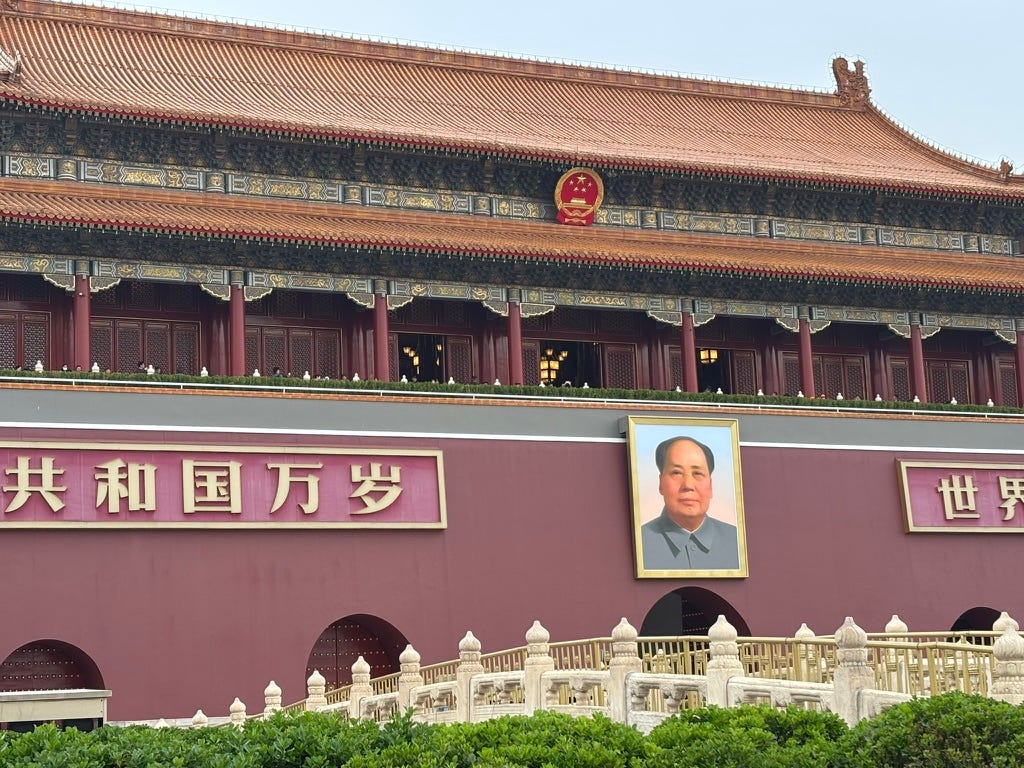
Craftsmanship
China is a place famous for craft. Eastern philosophy dripping in ego death. The self is an illusion. You owe deference first to your parents, secondly to your family and finally to your ancestors. Filial piety. Ancestry is not nostalgia, it is a dimension of taste. What you inherit shapes what you can build.
Walking even the most modern of streets there, you feel the history. The artisanal heritage. The reverence for the physical world. It does not surprise me that they have retained imperious mastery over making things. Manufacturing. Robotics. Infrastructure.
Before I left, I had published an article arguing that taste - the capacity to recognise quality and produce something irreducibly yours - is the skill AI cannot replace. I came to realise that this argument was too limited.
Because taste is not just informed by territory but also ancestry and deliberate choices of what you evolve and what you preserve. Taste describes what good judgment looks like from the outside. It says nothing about how it gets built.
The distinction matters because we are drowning in thought leadership. A cacophony of voices - some authentic, some slopified - clamouring for relevance and algorithmic dominance.
Galloway says storytelling is the essential skill. McKinsey says deep thinking matters. Multiple Substacks have declared that being human is the competitive advantage of the AI age. They are all correct. They are all stopping at diagnosis.
The doctor walks in, names the condition, and leaves the room before writing the prescription.
The prescription is craft.
The antidote to effortlessness
Craft is the deliberate, repetitive work of staying with friction when the frictionless path is available.
It is the sommelier who has tasted ten thousand wines, not because any single tasting was transformative, but because the friction itself built her judgement. Distinguishing, comparing, being wrong, revising. An architecture of judgment that no shortcut could replicate. It is the surgeon whose hands know something her conscious mind cannot fully articulate. It is the founder who walks into a factory and sees what the consultant’s report missed, because twenty years of proximity to production have trained a perception that operates below the threshold of language.
Craft is not talent. Talent is weather - you are born into it or you are not. Craft is agriculture. It is what you do with the soil you were given.
That distinction matters now because AI has changed what compounds.
A calculator does what you tell it. AI is different. It is a compounding function. It multiplies whatever you feed it. Feed it clarity and incremental discipline, it compounds value. Feed it vagueness, it compounds noise. The returns to knowing exactly what you want and being willing to build toward it in steps have never been higher. The penalty for not knowing has never been steeper. Which is why the world is simultaneously full of more AI-generated content than ever and more aimlessly created companies than ever - the cost of starting has collapsed while the cost of finishing well has not changed at all.
Shaw and Nave’s research on cognitive surrender at Wharton gives this empirical teeth. Their finding: when AI was available, roughly eighty percent of participants followed its recommendation even when it was confidently wrong. Their confidence went up, not down. That is what happens when you feed the compounding function without the qualities it needs to compound well.
Three qualities, in my experience, are what turn AI from an averaging machine into an accelerant. They are the craft qualities. They can be cultivated.
Three things I have noticed
The first is clarity of mission.
Before you touch the machine, you need to know what you are building toward. Not a vague direction - a specific outcome with enough definition that you can tell whether the AI’s output moved you toward it or away from it. The compounding function does not care about your intentions, it cares about your inputs. A clear mission gives it a vector. An unclear one gives it permission to average.
Write down what you believe is true before you prompt. A hypothesis forces you to have a position the machine can challenge, rather than a blank space the machine fills.
The second is incremental discipline.
Craft is not a single gesture. It is the patient accumulation of small, friction-rich steps - each one slightly better than the last, each one informed by what the previous one revealed. AI tempts you to skip the steps. It can produce a finished-looking output in seconds. But the finished look is a mirage if you have not done the thinking that earns it.
Generate the range and sit with it. The act of choosing between options is where judgment gets built.
The third is the separation of signal from noise.
AI generates an extraordinary volume of plausible output. Most of it is noise wearing a suit. The craft quality that matters most is the ability to look at ten things that all sound reasonable and know - before you can fully explain why - which two are actually right. This is taste in its most functional form. It is built through the repeated experience of being wrong, noticing you were wrong, and recalibrating.
It cannot be taught by instruction. It can only be earned through friction.
Beginning and endings
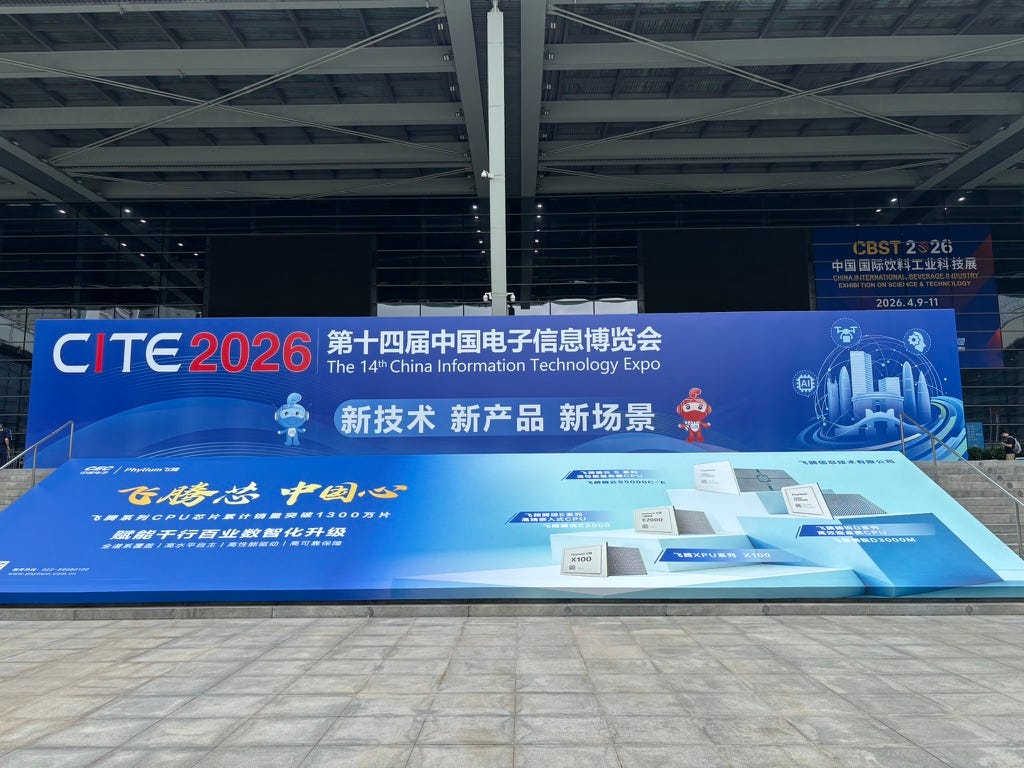
At the start of our trip, Jen and I had spontaneously hopped a bullet train to Shenzhen. China’s first special economic zone - transformed from a boondocks border town to a global tech metropolis.
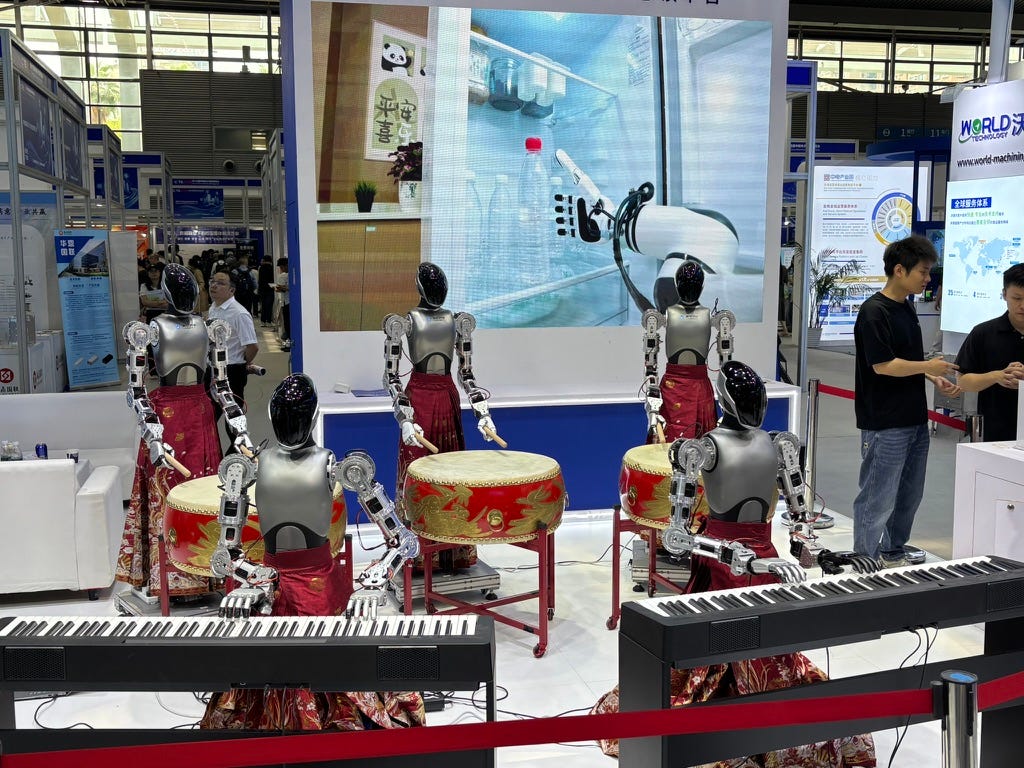
As we walked the floor of CITE 2026 - China’s largest consumer electronics expo - I watched a robotic arm tentatively extend towards a sunflower.
The prompt? Pick a flower that likes the sun. By inference, not label, this metallic green thumb then placed it in a vase and angled it toward the window. It had interpreted intent, not just followed instruction. I was in awe.
Further down the hall, a companion robot designed for China’s only children frolicked away. Not a mere toy - a cure for an increasingly isolated adolescent world. Personalised learning that builds an emotional connection over time. China was building the infrastructure to survive modern loneliness.
The energy was extraordinary. Entrepreneurial spirit stretched across every layer of the supply chain - not just the software, but the robotics, the drones, the manufacturing automation, the physical infrastructure that makes embodied AI a near term reality. Knowing our own humanity felt so vital here.
A few days later I was in Chaozhou - a small city in Guangdong, where Jen’s family is from. In household after household, relatives poured tea. Not generic tea. Gongfu tea - this leaf, this water, these cups, this particular gesture of pouring and receiving. The connection happened because of the specificity. A ritual repeated across homes and generations, each instance slightly different, each one unmistakably from this place and nowhere else.
In Shenzhen I saw what AI can do. In Chaozhou I experienced what it cannot replicate. The sunflower robot understood the metaphor. The tea understood the family. One runs on inference. The other runs on terroir.
The human watermark
After Jen had punctured my bubble, I redoubled my efforts to finalise my teaching presentation. Sifting through her executive MBA materials, I stumbled upon Mark Thomas, a product leader at Reddit who teaches at UCLA Anderson.
The human watermark. A phrase slipped almost casually into a 140 slide deck. His observation is that consumers have an innate detector for the inauthentic. As AI-generated content, synthetic interactions, and automated experiences flood every channel, people gravitate toward what they can sense was made by a human being. Reddit became a stronghold, he argues, precisely because people wanted actual discussion - not aggregated, one-sided answers.
Ben Thompson at Stratechery makes the economic case for the same insight. AI scales compute to individuals. Humans scale uniqueness to audiences. The dynamic is the inverse of AI. In a world of synthetic everything, provenance - proof that a human made this - commands a premium that no algorithm can replicate.
Thomas describes the demand. Thompson describes the economics. Neither answers the supply-side question: how do you build the thing that carries the watermark? How do you become the person whose contribution is detectable as irreducibly yours?
I don’t have a clean answer to that. What I have is a partner who told me I was overcomplicating it, and an hour later was pouring tea that smelt of jasmine and nostalgia. The watermark is not a slogan you print on the cover. It is what was already happening before you tried to write about it. Terroir, worked by craft, in places you weren’t looking - the swim before dawn, the awkward conversation, the paragraph written by hand because the screen was making you dishonest.
It is the very last inch of us, in a world that will keep compressing.
Find yours.
Subscribe to The Reinventor’s Mindset an essay each month on craft, transformation, and the work that stays yours.
Notes
Manfred F. R. Kets de Vries, “Carpe Diem: Don’t Postpone Your Dreams,” INSEAD Knowledge, January 2022.
Steven D. Shaw and Gideon Nave, “Thinking—Fast, Slow, and Artificial: How AI is Reshaping Human Reasoning and the Rise of Cognitive Surrender,” The Wharton School, January 2026.
Mark Thomas, Senior Director of Product at Reddit and Affiliated Faculty, UCLA Anderson School of Management. The “human watermark” concept comes from his teaching deck.
Ben Thompson, “AI and the Human Condition,” Stratechery, January 2026. Source for the “humans scale uniqueness to audiences, AI scales compute to individuals” framing.
Scott Galloway has argued in multiple venues for storytelling as the durable skill; McKinsey’s research on “deep work” and judgment in the AI era makes the complementary case.
To Jen - for the line that closed the laptop.