Late last year I sat in a lecture theatre at INSEAD, amongst executives from thirty countries, reading a Harvard case study about a woman who threw dinner parties.
Heidi Roizen was one of the best-connected people in Silicon Valley - entrepreneur, Apple executive, venture capitalist. The case gets taught as a masterclass in networking. And throwing killer parties.
She cooked herself - deliberately ordinary food, spag bol. Guests brought a dish. And every person she invited knew roughly half the room: familiar enough to relax, new enough to matter. USA Today once called her home the closest thing the industry had to a salon. The most powerful room in the Valley, engineered not to impress anyone.
Later this year, I’m going to pilot The Reinventor’s Mindset - From The Arena event. Not because I want to be Heidi, but because I think the world needs more meaningful, intimate learning environments. Being in the room where it happens is something AI can never model.
But before I ask for your help shaping it, meet this edition’s guest - because her whole story turns on a single question, asked by a friend across a table, that dismantled a decade of backup plans.
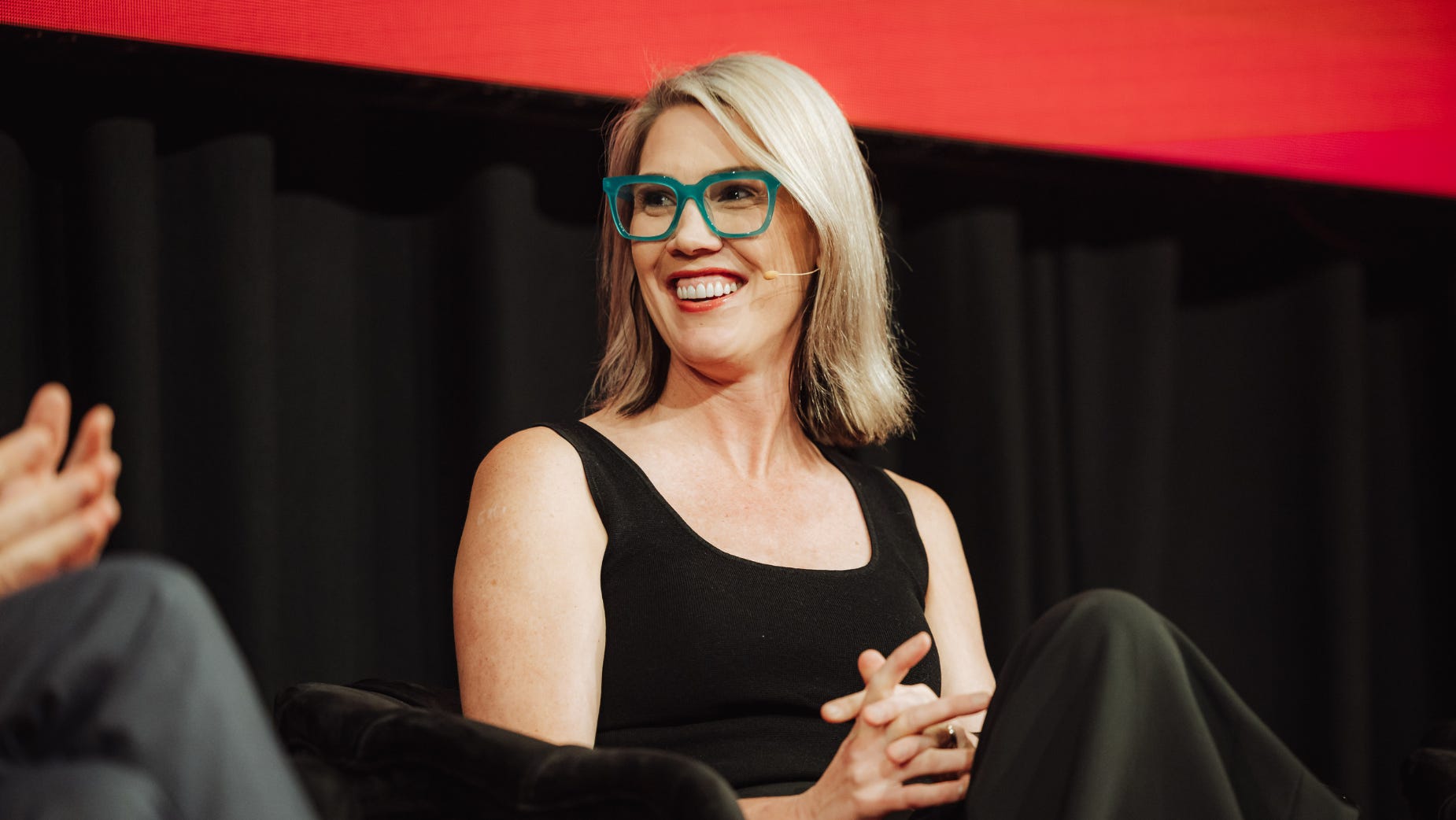
Commitment Before Capability with Dr Kellie Nuttall
(Executive Director, Future Secure AI)
The full episode is available now on Spotify and Apple
Dr Kellie Nuttall spent thirteen years at Deloitte, built its AI Institute, and became one of Australia’s most recognised voices on AI. Underneath it all sits a PhD in the psychology of decision-making - she knows scientifically how humans weigh risk. Now she helps build Future Secure AI: a company making AI coworkers, taking on from the inside the adoption problem she’d spent a career diagnosing from the outside.
We first met on the AI Fluency Sprint at the University of Sydney - back when Claude was still just a fable and data was still unsexy.
And here’s what you need to know about her before any of it makes sense:
“Everyone goes, you must be super courageous. I’m the most risk-averse person ever.
I have a backup plan - and a backup plan on that backup plan.”
Hold that thought.
The girl who wouldn’t leave North Queensland
Kellie won scholarships to universities she never attended - she was too scared to leave her hometown in Nth QLD, and her mum. She stayed home for as long as she could while she did her PhD. When she finally moved, it was to Brissie, “because that was the least risky thing I could do.”
The only job that fit a stats-heavy psychology PhD was market research. Market research led to superannuation in the middle of the GFC. Then a government department advertised for someone to build a data centre of excellence - in transport.
“I remember saying to my husband, it sounds cool because I’ll get to build a team.
But God, transport sounds boring.”
She took it anyway - she was twenty-seven, and it came with twenty people instead of a desk in the corner. Then real-time data got its hooks in: sensors, traffic cameras, whole networks talking at once. The boring job became the place she learned to turn data into decisions. The centre went gangbusters. Then a change of government cut her team from a hundred people to six.
Look at the shape of those years. Every single move minimised risk. And reinvention kept arriving anyway, usually uninvited.
The six-month experiment
What was meant to be a six-month experiment joining Deloitte became thirteen years - long enough to build three careers inside one firm, and long enough for, in her words, it to become almost forged with her identity.
Which is what made the next part so hard. This was the moment of AI, and she could feel herself drifting too far from the work itself:
“To be on stages talking about how pivotal this moment is, but not have my hands dirty — for me it was a point of authenticity.”
Hold that word too. It comes back.
Run to something
She resigned with nothing to go to, giving herself until year end to find the answer. Signed a contract to build a house in the middle of it - no job, husband working a couple of days a week.
And then she did the thing that separates this story from a mid-career wobble: she refused to job-hunt.
“Don’t run from something. Run to something. I had no idea what I was running to yet - so I wasn’t going to take any job coming my way. That would be running from.”
Four months of criteria, not applications. She wanted her hands back on the technology - where it breaks, what’s real, what’s not. She wanted to be mentored by executives who’d walked the halls of major corporations. She talked to startups, academia, hyperscalers, client-side roles. She talked about starting her own thing.
When she finally walked into Future Secure, it felt like the job had been made for her.
Read the order of operations again, because it’s the whole lesson. The commitment came first. The clarity came second. The capability is being built now. She didn’t leap because she was ready - she got ready because she’d leapt, and a signed building contract meant there was no running backwards.
The authenticity researcher who feels like a fraud
Her PhD examined something that had never been tested before: authenticity as a cue for quality and value. The Brazilian making your coffee. The founder who visibly bleeds for the product. Her research showed we rate that output higher and pay more for it. How much you genuinely care turned out to be one of the most powerful cues of all.
Twenty years on, she watches AI flood the world with competent, averaged output and wonders whether her thesis has come full circle - whether the premium on real is about to get bigger, not smaller.
Then she said the quiet part - the one I suspect half the leaders reading this will recognise:
“Where I’m not an expert and I’m trying to use AI to help me, it actually erodes my confidence. I don’t think we talk about that enough. I feel like a fraud.”
The woman who proved we pay a premium for what’s real, quietly doubting whether she’s real enough. The confidence people read from the outside isn’t what’s happening inside.
So jump
At the end of every episode I ask the same question: what childhood belief did you have to let go of to become who you are today? Kellie went straight to it.
“That I’m not good enough.”
The kid with potential. The B-plus that could have been an A. A belief that never lets you rest - because there’s always something more, and peace never quite arrives.
And then she told me what actually triggered this transformation. Not a strategy review. Not a market signal. Not anything an algorithm served her. A dear friend, a former client, looked at her across a table and said: you look really sad.
And asked one question.
“If you died tomorrow, Kel - would you be happy with the choices you’ve made today?”
She wasn’t. So she changed them. That’s Commitment Before Capability.
Readiness is not the precursor to commitment - commitment is the precursor to readiness. Book it, then become it. Kellie’s backup plans never made her safe; they made her stationary. The resignation with nothing to go to, the house with no job - that’s what made retreat impossible. And it’s what made the clarity finally arrive.
Her last words on the recording, from the most risk-averse person in the world:
“There is a big world out there. So jump.”
Kellie had a backup plan on her backup plan - and what finally moved her wasn’t a plan at all. It was a question, asked by a friend, across a table, in a room built for it.
So help me build ours. Hit reply and tell me:
What would make a room like that worth your evening? Who should be in it? And what’s the one conversation you’d want to have there?
- AJ