[No plot spoilers for Nolan’s The Odyssey ahead - but if you want to walk in with a completely blank slate, see it first.]
“The port was alive with strange faces. It was dawn by the time he found an old salt willing to part with a vessel for what bullion he had left, a cutter with a Bermuda rig called the Merciful, the sails ragged and ripped, its compass cracked, its rotten hull just barely able to cut the breakers. But it would be enough to make his escape.” - The Leftovers
As I watched The Odyssey a week ago, I couldn’t shake this feeling of nostalgia that came over me. The story and the movie itself are almost tailor-made to invoke this feeling. Homecoming. Loss. Longing.
But this felt more personal. Was it the fact I’d read the tale over 20 years ago as a young 16 year old doing his HSC English major work? Or was it the YouTube clip of the Leftovers I watched again and again in the wake of my divorce?
No, that wasn’t it either.
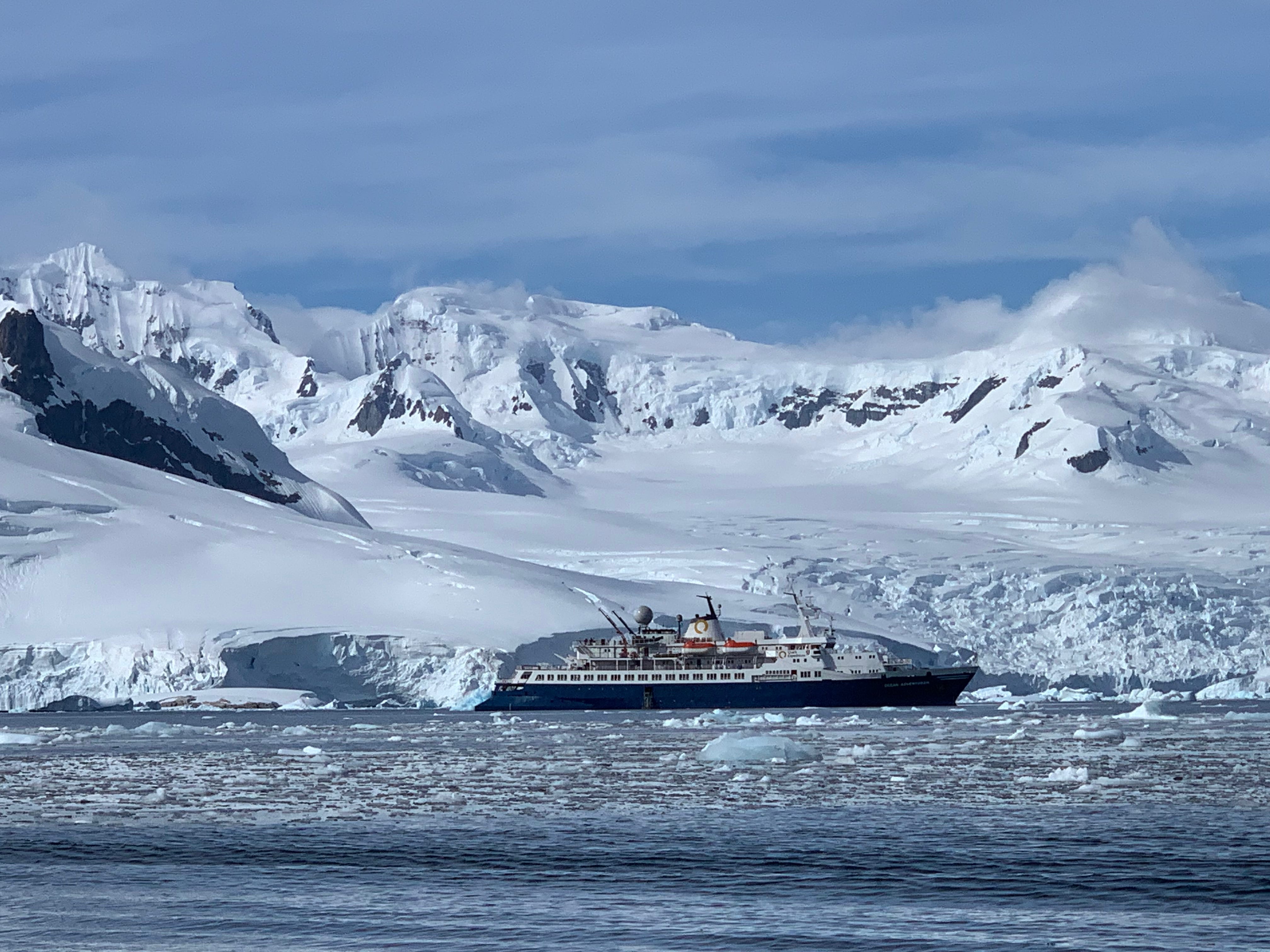
It was the feeling I’d once had, of being lost at the bottom of the world. Snow and ice-covered peaks rising from the sea like cathedrals - sun, sky, ocean, mist meeting in an endless dance that seemed to pulsate beyond our normal lives.
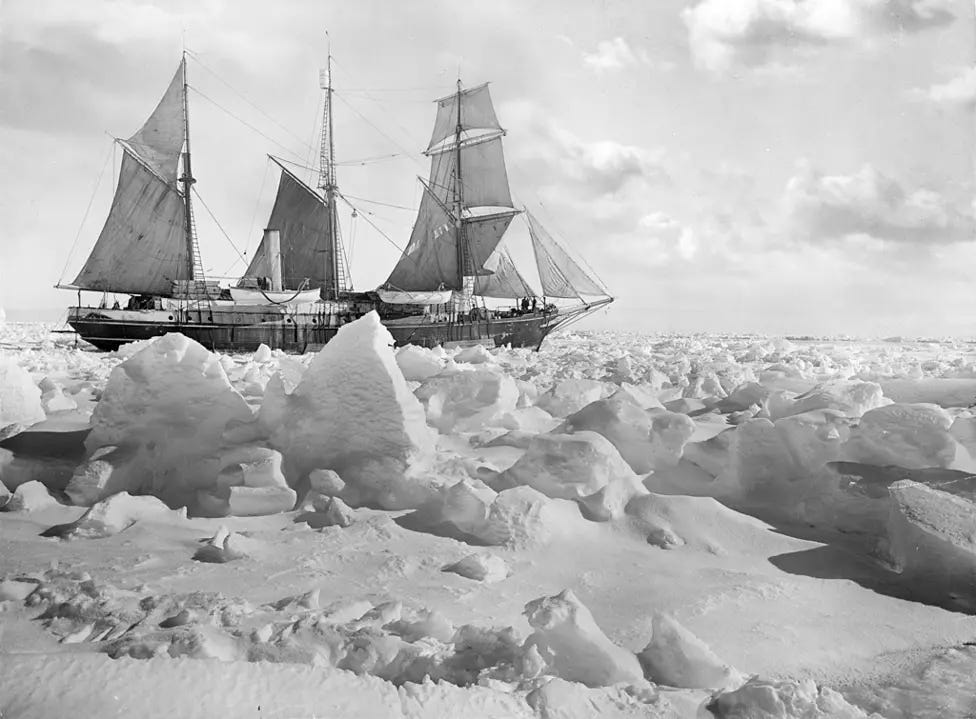
Antarctica. Endless but teeming with life. Against all odds. Struggling, striving, thriving to live. But I had merely been playacting adventure. On board the Ocean Adventurer - a modern marvel that cut through the ice with grace and ease - not like the weathered wooden ships of Shackleton’s Endurance with his merry band of mad men.
I devoured his biography on that trip. The most extraordinary story of leadership, survival, and the human spirit I had ever encountered. As I read, emotions from my own journey flooded over me. My divorce. My father’s death. The ocean, the ice. My own yearnings for solitude and peace. For connection.
Just like Odysseus
The Greek word for it is Nostos - the voyage home. Not travel, nor adventure. The specific journey of a man trying to return to who he was before the world left its scars on him.
Nostalgia, a literal ache for a return.
Endurance in the end is the nostos where Ithaca get abandoned. The crossing fails, the ship is crushed. And the entire meaning of the voyage becomes survival. Getting all 28 men home alive. Success redefined as return.
Paradise Lost
Was Shackleton’s sin the pursuit of an impossible voyage? Or the fact he was such a good salesman that he convinced so many other souls to join him? Is the pursuit of the impossible even a sin at all…
Apocryphally, his job ad was famously matter of fact
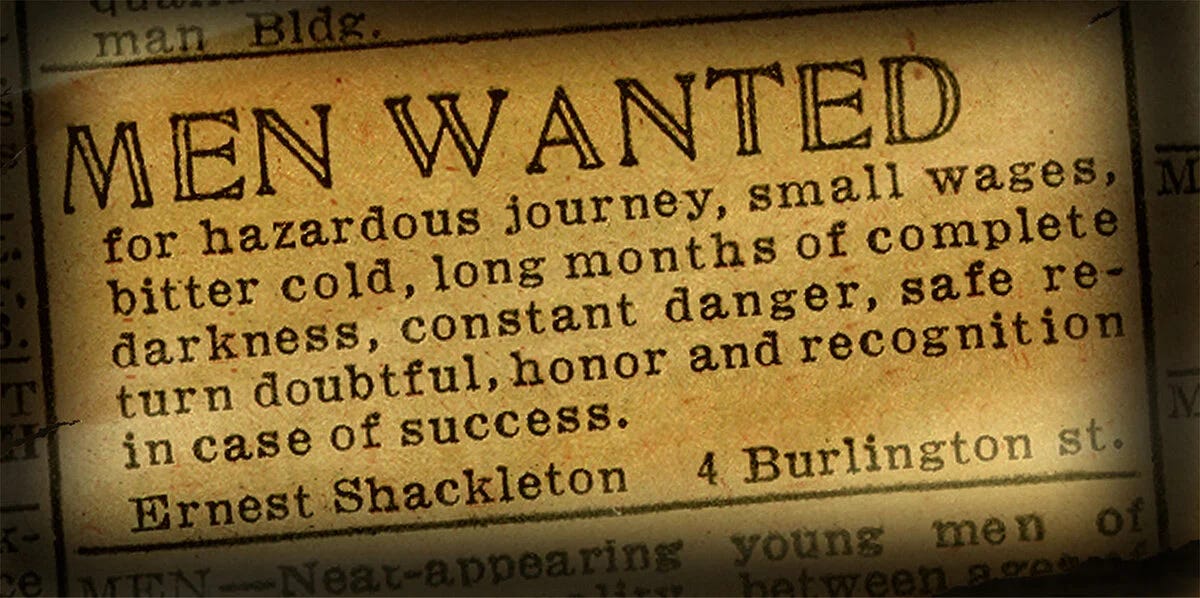
And, he brought them all home.
Shackleton's voyage cost only the men who signed up for it. Nolan's argument in The Odyssey is that Odysseus's transgression runs much deeper - to the level not just of a soul, but of an entire society.
One clever man breaks the covenant, and the world doesn’t just punish him. It unravels. For everyone.
Xenia, the sacred obligation between strangers. In the film, Zeus’s Law: any traveller might be a god in disguise, so you feed them, shelter them, ask nothing first. And Odysseus breaks it. The Trojan Horse is a gift, weaponised. Hospitality turned into slaughter.
History runs even deeper here, the Bronze Age collapsed during the time of the Trojan War. Nearly every major Mediterranean civilisation fell within about fifty years. Among the suspects: raiders the Egyptians called the peoples of the sea. Faceless. Amoral. Arriving from the water to burn what three thousand years had built.
But the sin goes deeper, because on the journey home. Odyssey and his men don’t just encounter trials and tribulations, they also become the very thing that their families back home lie in bed at night and fear.
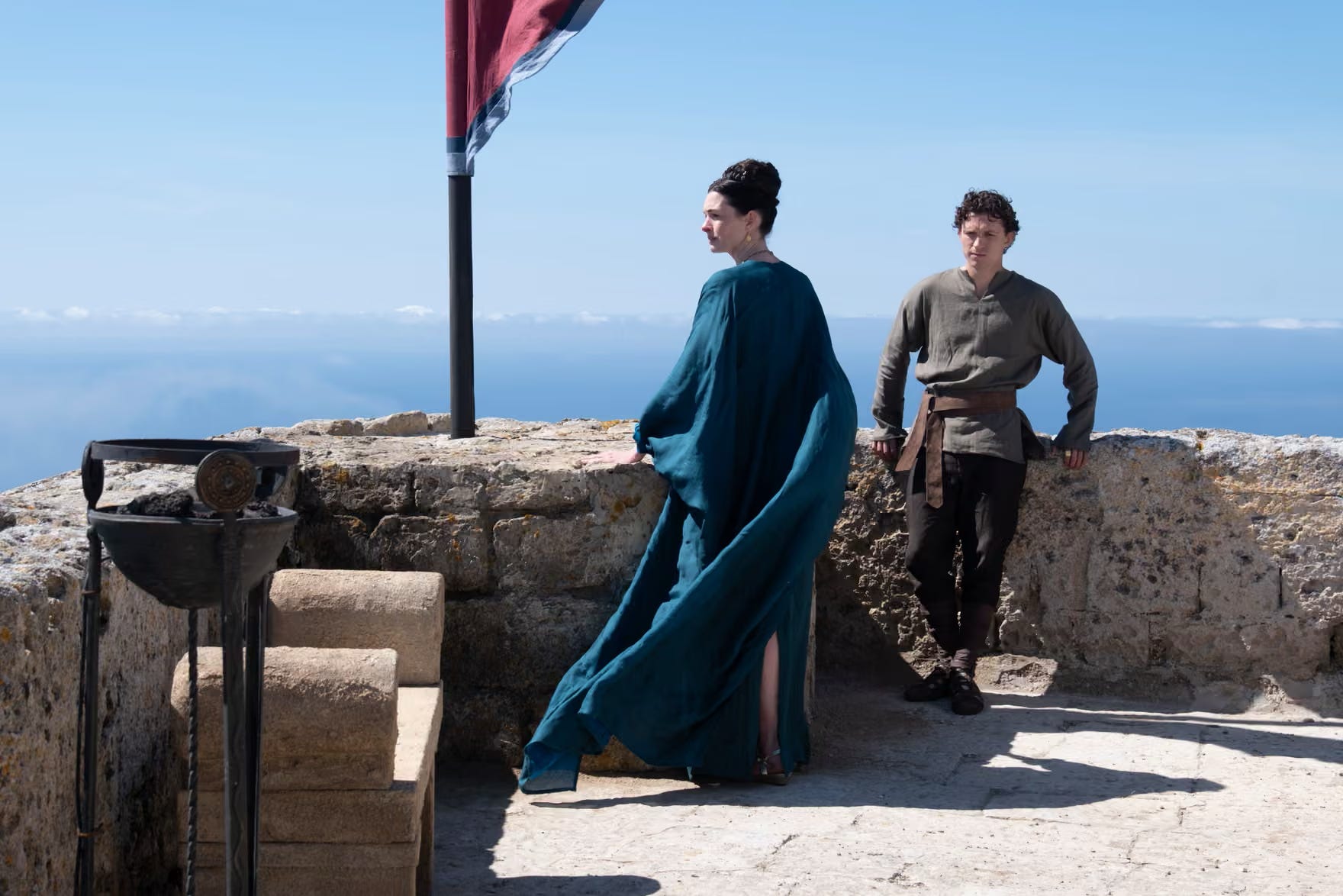
The homecoming and the apocalypse were the same event.
The Greeks had a word for this too. Miasma - the pollution that flows from a transgression and follows the transgressor, contaminating everything he touches, long after the act is done. The stain that outlives its cause. Odysseus broke the covenant once, at Troy. Then the broken covenant sailed home to every island in the Mediterranean, wearing the faces of kings.
That’s what makes the Odyssey timeless, I reckon. Not the monsters. The question underneath them: what does the voyage do to the man making it?
Whether what comes ashore is still the man who left, or just what the war made of him, wearing his face.
The book I’m writing now, Bold Water, turned out to be a nostos too. With one difference I didn’t see until I was deep inside it: Odysseus sails home to an Ithaca that exists. I’m voyaging home to an inheritance I never received - one buried before I could take possession of it. A homecoming to a place I’ve never been.
But it turns out I’m writing about the same stain. What war did to those men, poverty and shame did to a boy I knew well. It made him someone the sea could carry but no shore could hold - capable, relentless, and carrying something into every room he ever earned his way into.
The question my book asks is the one Odysseus never answers: whether a man can come home without becoming the thing the shore fears. Whether there’s a version of the return that isn’t a raid.
I think there is - the old salt in the Captain’s Library already showed me one. The crossing failed, the ship was crushed, and he came ashore still himself. 28 men, no raid.
It looks nothing like arriving in triumph, and everything like walking back into the water your father left you.